You wash your car, rinse away the dirt, and dry the bodywork. White rings still show on the hood and doors when the light changes. For Greensboro drivers, those marks raise a useful question: Is something still sitting on the surface, or has the finish developed a lasting blemish?
The answer determines the next step. Another wash, a suitable mineral-removal treatment, and paint correction serve different purposes. This guide explains why water spots persist, how to describe the problem, and what to discuss when arranging water spot removal in Greensboro, NC.
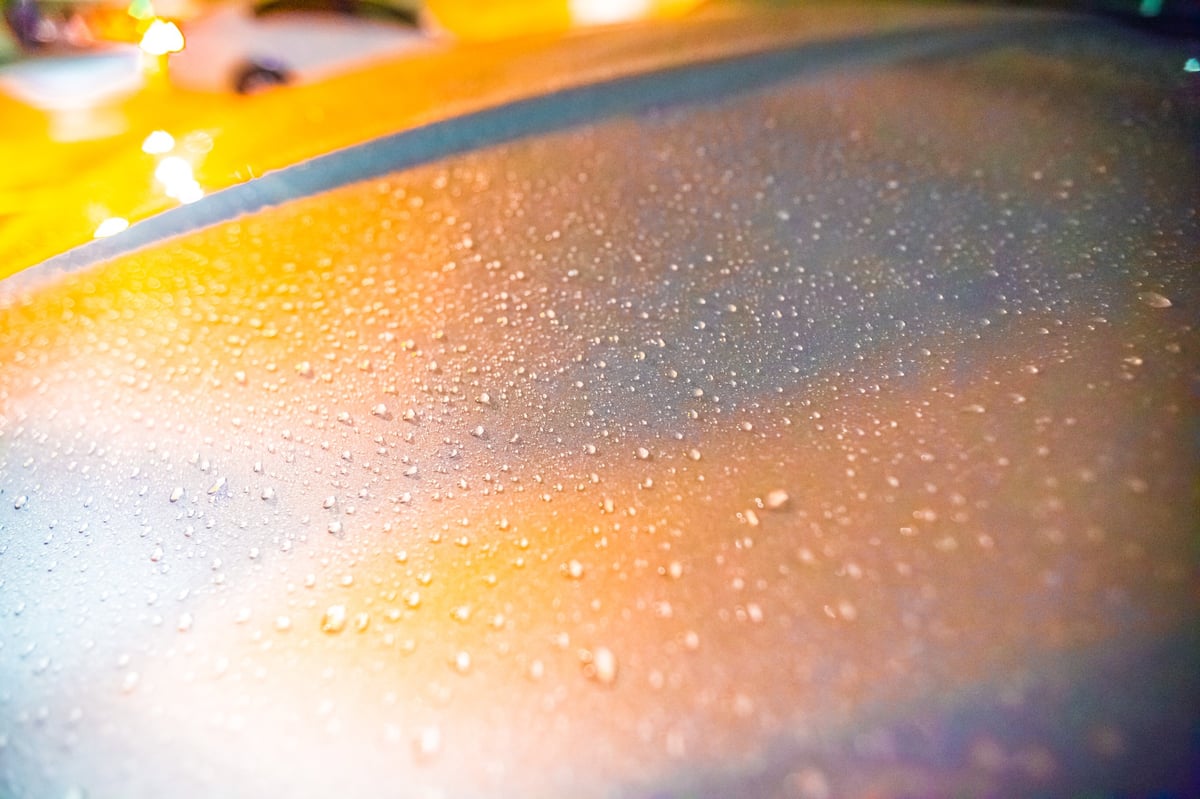
Water evaporates, but dissolved minerals and other residue do not necessarily leave with the water. The material left behind forms visible spots or rings on the surface.
A deposit is material sitting on the finish. Etching involves a change to the finish itself. A car also has several exterior materials, including painted panels, glass, plastic trim, and any applied protective film or coating.
CARPRO’s Spotless product information describes mineral deposits and the need to remove those deposits before the finish becomes etched. That distinction matters because removing contamination and correcting an affected finish are separate tasks.
A white ring alone does not establish which condition you have. Age, earlier cleaning attempts, surface type, and the appearance after suitable cleaning all help guide an assessment.
Start by identifying the affected material rather than treating every mark across the vehicle as the same problem.
Photograph the spots in ordinary daylight. Include a wide view of the panel and a closer view that shows the marks clearly.
Then record where the problem appears. Is the spotting concentrated on one side of the car, across the roof and hood, or mainly on the windshield?
Think about recent exposure. A vehicle parked beside a sprinkler has a different history from a car that showed marks immediately after a driveway wash. A recently coated vehicle needs different product compatibility checks from an uncoated vehicle.
Useful details include:
The pattern supplies clues rather than a complete diagnosis. Share those clues with the detailer so the assessment begins with the vehicle’s actual history.
A clean-looking rinse does not guarantee a spot-free finish.
Check whether the panels are hot, whether you wash in direct sun, and whether water dries before you finish the vehicle. Also review the final rinse and the cleanliness of your drying materials.
Ford’s exterior care guidance advises washing away from hot surfaces and strong sunlight, using suitable car shampoo, and drying to address water spotting. Your own vehicle manual should guide the materials and methods for your model.
For a Greensboro driveway wash, choose a time when the bodywork has cooled and you have enough time to complete drying. Set out the approved supplies before starting so you do not leave wet panels unattended while looking for equipment.
Work in manageable sections and follow the shampoo instructions. The aim is a controlled process from washing through drying.
A spot assessment should take place on a suitably cleaned surface.
Loose dirt, road film, and other contamination complicate the inspection. Wash according to the vehicle’s care instructions, then review the marks after drying.
Do not turn that first wash into repeated aggressive scrubbing. Record whether the spotting remains and where the appearance changed.
A professional assessment should identify the surface, consider existing protection, and select a suitable test area before expanding a treatment across the car.
If the vehicle has matte paint, a wrap, or protective film, mention that condition before any specialist product is chosen. Treatment instructions for glossy factory paint do not automatically establish suitability for another finish.
Sparkle NC’s detailing services provide a starting point for discussing exterior cleaning and paint assessment. Describe the spotting rather than selecting a larger correction package without reviewing the cause.
A mineral deposit sits on the finish and may respond to suitable cleaning. Etching changes the finish itself and is a correction task. Assessing the surface first prevents spending time on the wrong procedure.
The phrase water spot remover covers products with different methods and restrictions.
Some products target mineral deposits chemically. Others include polishing action. Product suitability depends on the surface and any protection already present.
Meguiar’s describes its Water Spot Remover as an abrasive formula that also polishes. The manufacturer excludes flat, matte, and satin finishes. This example shows why the product name alone does not establish the correct treatment.
Read the current label for approved surfaces, application conditions, removal instructions, and testing requirements. Follow the stated directions for that exact product.
Avoid building your own process by combining instructions from several different cleaners. The recommended contact time and final rinse for one formulation do not apply automatically to another.
If you do not know the surface or existing protection, arrange an assessment before applying a specialist remover.
A persistent mark after one cleaning attempt does not prove that polishing is the next step.
The cleaner might have been unsuitable for the deposit, the treatment might have been incomplete, or the finish might have a separate defect. Review what changed before choosing another procedure.
A detailer should explain whether the remaining appearance reflects contamination, an affected finish, or another condition requiring a different service.
Sparkle NC’s paint correction guide explains the company’s assessment and polishing services. Discuss the expected improvement for your vehicle after the surface has been reviewed.
Ask which areas need correction, what result the provider expects, and whether any marks are likely to remain. Keep the conversation tied to the actual panels and finish.
A clear assessment helps you choose the work required without treating every water mark as a reason for full-vehicle polishing.
A coating changes the maintenance instructions you need to follow. Spotting on a coated car still requires assessment.
GYEON’s WaterSpot guidance states that compatibility depends on the coating and excludes use on fresh coatings. Follow the instructions from your coating installer and the current product label before applying a specialist treatment.
Tell the detailer which coating was applied, when application occurred, and which maintenance products you have used. If the coating name is unknown, say so rather than guessing.
Ask whether the planned treatment affects existing protection and whether any follow-up work belongs in the service.
Review Sparkle NC’s ceramic coating service for the company’s protection options. For an existing coated vehicle, request a maintenance assessment based on your current surface rather than assuming a new coating is the answer to visible spots.
A product intended for painted panels does not automatically suit every nearby material.
Identify water marks on glass separately from marks on paint, textured plastic, emblems, or bright trim. Tell the provider about window coatings, tint, wraps, and other treatments you know about.
Review the label’s surface restrictions and prevent unintended contact with adjacent materials. Some products have specific instructions for glass and different instructions for paint.
For a windshield, describe whether the marks sit outside or whether the haze appears on the interior. Exterior spotting and an interior film require different assessment.
Keep household abrasives and improvised scraping methods out of the process. Use the vehicle manufacturer’s care instructions and a product approved for the actual material.
If several surfaces are affected, request a plan that identifies the treatment for each area instead of a single unspecified spot-removal step.
Removing existing spots and reducing repeated exposure belong in the same plan.
If irrigation reaches your parking space, change the vehicle’s position or adjust the watering arrangement where appropriate. If spotting appears after your driveway wash, review the rinse and drying steps before adding more products.
For a vehicle parked at a Greensboro workplace, note whether one side repeatedly receives spray or runoff. A change in parking position offers a useful way to compare the pattern over time.
Keep a short record after the next few washes. Photograph the same panel under similar light and note whether new marks appear.
This record helps separate a recurring exposure from older blemishes that survived cleaning. You will have better information for the next assessment than a general description that spots always return.
Make drying part of the wash appointment rather than a task left for later.
Use the materials approved for the vehicle and any protective finish. Keep those materials clean and separate from tools used for dirtier areas.
Follow the equipment manufacturer’s instructions if you use a drying device. Choose a method that suits the available location and the vehicle’s care requirements.
After drying, inspect the panels and glass. Look for areas where water has collected around trim or openings, then address those areas using the approved method.
For a Greensboro owner fitting vehicle care around work or family plans, a smaller, fully completed wash session is easier to evaluate than a rushed process interrupted halfway through drying.
Avoid a fixed maintenance schedule based only on the calendar. Review the vehicle’s exposure, condition, and coating instructions when deciding the next appointment.
Before booking, send clear photographs and a short history of the marks.
Include the vehicle’s year, make, model, surface modifications, and known coating information. List the products already tried and describe the result.
Explain whether you want help with paint, glass, trim, or several areas. Ask which assessment the provider needs before quoting specialist work.
Confirm the appointment location and service arrangements. Sparkle NC offers mobile detailing around Greensboro and the Piedmont Triad, while specialist work should be discussed directly to confirm the appropriate setting.
For example, a hypothetical owner notices white rings on the passenger doors after parking near irrigation. The owner photographs the pattern, changes the parking location, and requests an assessment before applying another cleaner. That sequence addresses both the visible marks and a possible recurring source.
Begin with the surface, the history, and a suitable wash. Then distinguish cleaning from correction and include the source of repeated exposure in your maintenance plan.
For water spot removal in Greensboro, NC, contact Sparkle NC or call (336) 417-3886. Share photographs, coating information, and the treatments already attempted so the team understands the problem before recommending service. Sparkle NC provides mobile detailing throughout Greensboro, High Point, Winston-Salem, and the Piedmont Triad.